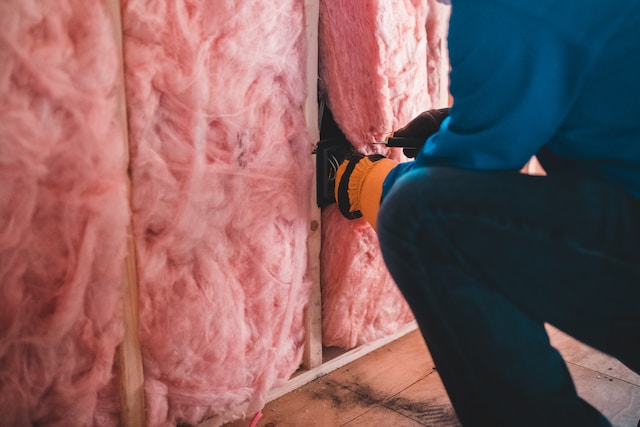
Proper insulation of your loft is essential to keeping heat inside your home, but cutting loft insulation in Glasgow homes to a fitting size can be challenging. There are three main ways of accomplishing this, depending on what kind of insulation material is being used:
There’s also the physically cut method, in which you use a long-bladed bread knife to slice through it manually. This approach may prove to be more accurate.
Before You Cut Loft Insulation in Glasgow
To ensure a successful cutting experience, it’s essential that the knife used is appropriate and safe for its task. Razor blades should be avoided since they can create snags in the material and result in an unsteady or uneven cut. Sharp scissors or shears may be preferable but may dull quickly on tougher materials like loft insulation. When cutting mineral or fibreglass insulation, it may be easier and more accurate to use an insulation saw placed over a board to ensure accuracy by rolling it tightly onto it, then sawing accurately over the board surface before cutting it off.
1. Knives with Snappable Pieces
An adjustable knife that snaps apart can make cutting loft insulation in Glasgow faster and more accurate, saving both time and energy. The Sollex Asphalt Roofing Knife 2000 comes equipped with longer blades suitable for mineral wool, foam, and rock wool cutting—the ideal tool to save time when working on loft insulation projects. Plus, it’s convenient and comfortable to hold!
Rigid polystyrene foam insulation can be difficult to cut, and using a utility knife is an excellent way to tackle thicker sheets. The sharp blade of this tool quickly slices through it without needing too much force; just make sure not to compress too much of the insulation, as this could make cutting it more challenging.
If you’re installing multifoil insulation, an insulation saw is also an effective tool. To ensure accuracy, tighten up the width of your roll of insulation before placing it over a board. Kneel on it to compress it evenly before cutting with your saw. Use a spirit level to check that cuts are straight; be sure to wear safety goggles and wear a dust mask while cutting with this tool to avoid inhaling small fibreglass particles that might otherwise get into your system!
2. Knives with a Serrated Edge
When cutting mineral wool insulation, it’s essential to wear protective gear in order to prevent inhaling dust particles that could exacerbate asthma or other respiratory conditions. Furthermore, working in an area with adequate ventilation while keeping nearby French doors and windows open to keep insulation from blowing around is also key for safe cutting practices. Finally, take great care in measuring, marking, and cutting accurately to achieve clean edges and precise cuts.
Knives with serrated edges can help make cutting mineral wool easier. While these knives typically feature metal blades, some also come equipped with plastic handles to improve safety and decrease injury risks. Some even come equipped with tools that let users adjust blade length in four positions for cleaner cuts.
Fibreglass insulation can quickly blunt a knife, so it is wise to employ one with a sharp edge when cutting it. To help keep the insulation in place while cutting, place it over a wooden 2×4, as this will help avoid damage to your floor during cutting as well as make it easier to follow marked lines when marking. Also, remember not to compress too much; over compressing will lessen its effectiveness and lead to reduced insulation performance.
If you’re working with fibreglass insulation, it is a wise move to use a piece of plywood underneath to keep the blade from touching your floor and potentially becoming stuck, thereby avoiding further injuries to both yourself and others. Likewise, this can prevent its blade from getting caught under insulation that has fallen onto it, thus protecting it from getting stuck or being knocked off altogether.
Before cutting, take measurements to assess how large of a roll of insulation you require for your loft and mark its location on tape and a marker—or use straightedges and wood pieces as guides if available—then mark where to cut. After the cutting has been completed, it’s a good idea to vacuum up all excess insulation prior to installing it in your loft for added comfort and energy savings.
3. Electric Knives
Although there are various tools and techniques for cutting Styrofoam insulation, proper preparation and attention to detail will ensure the cleanest cuts and professional-grade installation. When working in an enclosed environment, it is vital that ventilation be adequate, as dust or fumes could inhale into your lungs; wear protective gloves and safety glasses; and follow any manufacturer guidelines regarding power tools so as to avoid burns or other injuries from the cutting process.
Cutting loft roll insulation requires using a sharp, long-bladed knife or a carving knife with a precision blade. Compressing the fibreglass may damage and dull its blade quickly.
Fibreglass insulation may cause skin irritation, so it is wise to wear protective eye and respiratory gear while working with it. You should also wear long-sleeved work pants, safety goggles, and leather gloves to work safely with it. As fibreglass can become very messy when being worked upon, laying down some plywood underneath may protect the work surface and ensure maximum efficiency of work processes.
Use a jigsaw with a spliced blade to cut loft insulation for faster and more accurate cutting, although multiple measurements should be made prior to making cuts in order to avoid mistakes and wasted material.
Polystyrene insulation can be cut by using different tools, including hand saws, hot wire cutters, and long-blade utility knives. Before beginning cutting operations, it is essential that measurements are carefully taken with an angled guideline in place in order to make straight and clean cuts. If you are unsure how to cut insulation, consult an experienced professional or watch online tutorials for guidance in order to learn the appropriate technique.

Ethan explores innovative teaching methods, digital learning tools, and the future of education across Europe.